

Key takeaways:
- The performance and control limitations of shared hosting often spur organizations to search for alternatives.
- Virtual Private Server (VPS) and Virtual Dedicated Server (VDS) offerings can address shared hosting limitations, giving organizations options for balancing performance and cost.
- The right infrastructure provider will offer both VPS and VDS on the same platform along with the option to incorporate dedicated hardware in a hybrid model.
Let’s face it: Shared hosting is easy to outgrow. Your website or application performance might start to slow. Or your team might just need more control than your shared plan can deliver.
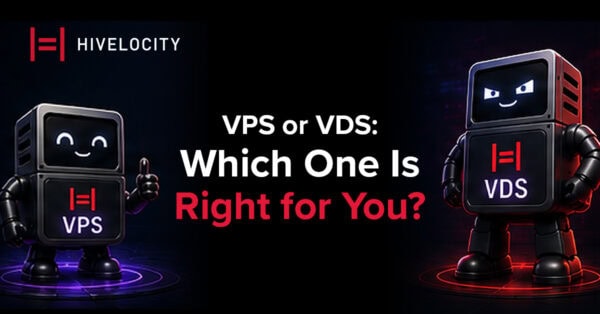
As you begin to explore alternatives, you’ll immediately encounter two terms that seem very similar: VPS and VDS. A Virtual Private Server (VPS) and a Virtual Dedicated Server (VDS) do share some traits—for example, they are both virtual servers. But the differences are important when deciding on your next hosting environment.
Fortunately, those differences are fairly simple to understand. And after assessing your workload requirements, you should be able to match your workloads with the right model and find the right balance between consistent performance and cost.
The Problems with Shared Hosting
Many small and medium-sized businesses start with shared hosting. After all, this model can offer a very cost-effective and relatively painless means of getting a new website or application off the ground.
But over time, your organization might start to encounter the limitations of the shared hosting model. Performance is often the biggest issue. With a shared environment, you share server resources with other businesses. Most of the time, that could be fine. However, when another business needs significantly more resources—for example, to support seasonal e-commerce sales—the performance of your site or app could suffer.
Shared hosting also limits the control you have over your environment. Typically, you can’t optimize the server for speed, security, or anything else.
VPS and VDS offerings can help you overcome the performance and control limitations of a shared environment. In many cases, any incremental cost increases compared with shared hosting are well worth it.
Defining VPS
While CPU cores are shared, customers can have guaranteed minimums. In other words, any short-term demand from other organizations will have a limited impact on your website or app.
A VPS also provides greater control than a shared hosting environment. You gain root access so you can install software and configure settings that you couldn’t with shared hosting.
Because the physical hardware is still shared, a VPS is often less expensive per month than more dedicated resources.
Understanding VDS
A VDS eliminates resource sharing. CPU and memory allocations are dedicated and never shared with another tenant. There are no “noisy neighbors.” As a result, performance remains consistent even if another organization’s workload is bursting.
These dedicated resources do add some cost. VDS offerings are more expensive than VPS offerings.
Choosing the Right Virtual Server
Deciding between VPS and VDS offerings requires an assessment of workload requirements. For mission-critical workloads, where performance cannot waiver, a VDS is a better choice. Organizations select the VDS option for e-commerce, SaaS, and other workloads where performance issues could translate into angry customers, frustrated employees, or lost revenues.
Of course, not all workloads are critical. For example, you might have a dev environment or an internal website that can tolerate occasional variance in performance. For those types of workloads, a VPS is the right choice. You can take a step up from the performance and control limitations of shared hosting without having to spend more for VDS.
Finding the Right Infrastructure Provider
Once you’ve selected the right type of virtual server, you can focus on the infrastructure provider. First, select a provider that can give you the control you want on both tiers. Make sure you have the access to sufficiently configure your environment: Whichever server type you choose, it should be change from the limited control over shared hosting.
Second, choose a provider that can simplify software installation. Finding a provider that offers one-click installs for key applications can help you significantly reduce manual work and accelerate time to value for your new resources.
Finally, look for a provider that will give you flexibility for change. You should be able to transition from a VPS to a VDS without substantial hurdles. And if you someday want to move past virtual servers, the right provider will enable you to incorporate dedicated hardware in a hybrid model, all without a major migration.
Gaining Performance and Control
VPS and VDS offerings address essential limitations of shared hosting. They can help shield your workloads from the full performance impact of neighboring workloads, and they can restore control over server configuration. While a VDS offers greater isolation, which is important for mission-critical apps and websites, a VPS keeps costs lower.
Hivelocity offers VPS and VDS hosting, on the same platform, to give your organization the flexibility to match the type of virtual server with workload requirements. In addition, one-click installation of more than 30 applications available from the Hivelocity App Store simplifies deployment of foundational software. And the ability to connect a VPS or VDS to dedicated hardware via VLAN enables you to further expand your environment as your business needs evolve.
Learn more about Hivelocity VPS and VDS hosting.
FAQ
Q: What are the primary limitations of shared hosting?
A: With a shared hosting environment, resource-hungry workloads from other organizations can affect the performance of your hosted website or app. Meanwhile, you have limited control over the server, so you cannot optimize performance, security, or other aspects of the environment.
Q: What are key differences between VPS and VDS?
A: With a Virtual Private Server (VPS), each organization has allocated memory and guaranteed minimum CPU resources, which are shared. With a Virtual Dedicated Server (VDS), CPU and memory are not shared. A VPS is a cost-effective option for workloads that can tolerate some fluctuating resource availability. A VDS is suited for mission-critical apps and websites that need consistent performance.
Q: What should organizations look for from VPS and VDS providers?
A: The best providers offer VPS and VDS hosting on the same platform while also enabling organizations to incorporate dedicated servers into a hybrid environment. Those organizations can match workloads to the right virtual server and expand into dedicated servers when necessary. In addition, one-click app deployment can accelerate time to value and simplify management.
