
Key takeaways
- Responsive, human support from major cloud providers comes at an extra cost that grows alongside your spend.
- At a flat monthly price, the Hivelocity SaaS bundle provides 24/7/365 staffed support from actual humans, with a 15-minute average ticket response.
- Hivelocity’s self-serve capabilities and direct IPMI access allow customers to handle common, routine tasks and recovery without a ticket queue.
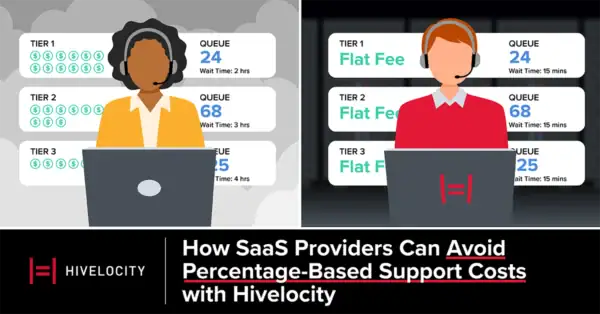
Major cloud providers offer human-based support with a named contact as a separate, percentage-based expense, not a fixed price. This means that as usage expands, SaaS organizations can end up paying a significant percentage of their overall bill for premium support. Plus, premium tiers often include training or architecture reviews. These can be useful. But for many SaaS teams, they ultimately just add costs for things that will go unused.
The Way Support Works in the Public Cloud
For hyperscalers, support revolves around tiers and queues. A SaaS provider—or any other customer—opens a ticket. It gets triaged based on the level of severity. Typically, the person picking up the ticket starts without any prior knowledge of your environment. Dedicated account contacts who understand your unique infrastructure scenario are reserved for the highest priced tier.
Tiers also determine the speed of your response times. If a problem appears at two in the morning on Saturday, you may wait 4 hours for triage and end up receiving it from someone without detailed knowledge of your environment. This will often require an additional step, and additional time, as you explain your setup to a new support contact.
Why SaaS Support is Different with Hivelocity
The Hivelocity SaaS Bundle is a purpose-built infrastructure as a service (IaaS) offering designed to help our SaaS customers optimize their infrastructure efficiency. It features 24/7/365 staffed support with a 15-minute average ticket response. This level of support is built into every tier, and the cost doesn’t grow alongside consumption.
Of course, not every change or issue requires a ticket. Hivelocity also offers self-serve capabilities that allow you to quickly handle routine tasks. Direct IPMI access can be used to reach and recover a server without waiting in a queue.
We also provide capacity and bandwidth monitoring that enables you to see what is happening before you escalate. When something does need attention, you reach the team directly instead of climbing a tier.
Get Started with the Hivelocity SaaS Bundle
In the Hivelocity SaaS Bundle, the same in-house support covers you across every tier. Engineering Compute (Tier 1), Production Compute (Tier 2), and Hi-Scale Compute (Tier 3) are all supported by the same team and include the same response target.
During onboarding, you’ll be assigned a technical contact for the first 30 days, which is where most setup questions come up. As you expand, support works the same way. You won’t have to renegotiate your support contract.
The Hivelocity team is ready to help you get started. We can sit down with you to assess what you currently pay for premium cloud support and what response times you’re getting. From there, we’ll walk you through how that compares to what you can expect from Hivelocity.
Contact us today to get started.
FAQ
Q: Why do SaaS teams pay more for public cloud support as they grow?
A: Premium support with fast response times and dedicated resources from public cloud providers is charged as a variable percentage rate, not a flat fee. As your usage and spending increases, so does your support bill.
Q: How does support work in the Hivelocity SaaS bundle?
A: The Hivelocity SaaS Bundle offers support with 24/7/365 staffing and a 15-minute average ticket response. This comes built into each tier. Customers also get a named technical contact for the first 30 days. It’s all provided for a flat monthly price that doesn’t grow alongside your spending.
Q: Does Hivelocity offer self-service capabilities?
A: Hivelocity customers can use self-serve tools for minor, routine changes. We also provide direct IPMI access that lets your team reach and recover servers. The included capacity and bandwidth monitoring enables your staff to see issues before making escalation decisions.
