Key takeaways
- Managing on-premises infrastructure can incur a “tax” of hidden operational complexity.
- Beyond monetary expenses, IT complexity restricts an organization’s speed and ability to innovate.
- Adopting a colocation model reduces the complexity tax, enabling internal teams to refocus on strategic projects.
Every organization expects IT infrastructure to consume some resources. Servers, storage, and networking require power. And all systems need some degree of human-involved management and maintenance. Organizations plan for the costs of these resources in annual budgets and long-term technology planning.
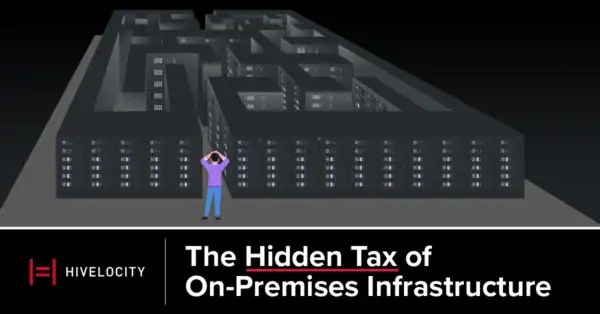
What often goes unnoticed is a different kind of expense—one that affects nearly every technology initiative an organization undertakes: the cost of operational complexity.
Unlike hardware purchases or software licenses, operational complexity isn’t something organizations intentionally buy. It accumulates over time. As organizations gradually deploy new solutions (from multiple vendors), they are forced to introduce new administrative interfaces, coordinate more maintenance windows, and expand the use of monitoring tools. If organizations are hosting this hardware themselves, complexity extends to facilities management: Teams need to add server racks, and augment power and cooling, to support the growing collection of systems.
This complexity is like a tax for on-premises infrastructure. As long as organizations continue to use their own hardware within their own server rooms or data centers, they will have to set aside a sizable part of their budget to handle operational complexity. And because this complexity drains resources, many organizations will need to reduce their expectations for tech-driven innovation.
Experiencing the Gradual Creep of Complexity
No organization sets out to build a complicated technology environment. Complexity happens gradually, often for perfectly legitimate reasons. For example, an IT team might buy a new cybersecurity solution to combat a very specific emerging threat. Then they buy another security solution to address a newly introduced government regulation about data privacy. As their hybrid workforce expands, they buy an additional security solution to strengthen access control. After a few years of addressing individual needs with new tools, the team could have more than a dozen solutions, all from different vendors. Team members would need to jump from one interface to another to manage everything.
Acquiring hardware-based solutions can create additional levels of complexity. Beyond having to juggle multiple software interfaces, teams have to physically accommodate, manage, and maintain new pieces of equipment. Each addition might require not only racking and cabling the new system but also expanding or upgrading the facility. Meanwhile, their organization will have to pay for additional power and cooling.
Consuming More Than Just Budget
There’s no doubt that the complexity tax can be measured in real costs. Every hour that IT team members spend managing solutions through multiple interfaces, updating facilities, and maintaining physical systems is costly. Furthermore, any server room or data center upgrades required to accommodate new systems can significantly raise the total cost of new solutions.
But the costs of complexity run deeper. When operational tasks pull highly skilled engineers away from strategic projects, organizations lose speed. For example, they lose the ability to deliver new AI-powered solutions or improve customer experiences fast enough to keep up with competitors.
More broadly, complexity erodes productivity. According to a recent report from McKinsey & Company, two-thirds of organizations struggle with complexity and inefficiency1—and those issues are holding them back from productivity gains. Technology teams experience the same challenge. Focusing on operational tasks means team members don’t spend enough time on high-impact work.
Simplifying Operations with a Colocation Model
Operational tasks are not going away. With technology likely to remain a primary business driver, organizations will continue buying and managing more IT infrastructure. The challenge is to simplify operations so that organizations can continue to benefit from these technologies while reducing the complexity tax.
Simplifying entails reducing unnecessary operational overhead wherever possible. Some organizations will benefit from moving workloads to a public cloud. But not all workloads can be run in shared infrastructure environments. Some might need dedicated hardware to meet stringent requirements for performance, security, or compliance.
When organizations have workloads that can’t be migrated to the cloud, colocation is often the right solution. Purpose-built colocation facilities handle key operational tasks, from managing power and cooling to scheduling vendor access and preparing for facility audits. An organization can eliminate that part of the complexity tax, enabling internal teams to stay focused on higher-impact projects.
Retaining Control of Hardware
Simplifying operations does not have to mean giving up control. With a colocation model, organizations can own and run dedicated hardware in the colocation facility. They choose and configure the hardware and software; maintain and orchestrate workloads; access their preferred networks; and oversee data placement and security.
They can also retain clear visibility over this colocation environment. Teams can monitor bandwidth, manage tickets, and establish alerts according to their own policies. Colocation gives organizations greater control while relieving them of operational complexity.
Anticipating Complexity and Reducing Its Impact
It would be difficult to completely eliminate complexity from IT. Technologies evolve rapidly, and in an effort to capitalize on the latest capabilities, IT teams will continue to adopt new solutions, even if there is a complexity tax to pay.
IT teams can, however, plan for complexity and develop strategies for minimizing its impact. Moving from on-premises infrastructure to a colocation model can significantly reduce operational complexity by offloading many facilities management tasks. Organizations retain control of their environment and gain greater flexibility for scaling resources without having to undertake facility upgrades. By refocusing in-house teams on strategic tasks, organizations can achieve the speed and productivity they need to gain a competitive advantage.
Learn more about how your organization can avoid the complexity tax with colocation services.
FAQs
Q: What is the “operational complexity tax” in IT infrastructure?
A: The operational complexity tax includes the hidden or unanticipated costs that accompany the purchase of new technology solutions. Beyond fixed hardware or software costs, this “tax” might include the money spent upgrading facilities to accommodate new systems or the opportunity cost of pulling engineers away from strategic projects for operational tasks.
Q: How does IT complexity affect business innovation and productivity?
A: When highly skilled engineers are burdened with complex operational tasks (such as managing numerous solutions or maintaining physical infrastructure), they cannot focus on projects like deploying AI-powered solutions or improving customer experiences.
Q: How does a colocation model reduce operational complexity?
A: Colocation facilities enable organizations to offload a full range of operational tasks, such as managing power, cooling, physical security, vendor access, and more. As a result, internal IT teams can reduce the complexity tax and keep their focus on more strategic, high-impact projects.
Citations
1McKinsey & Company, The State of Organizations 2026, February 2026
